Playing for More Than a Trophy: How Athletes Are Changing the Game Off the Field
For most of us, the relationship with our favorite athletes starts and ends on the field. You watch them grind through a brutal season, cheer when they deliver, and curse the TV when they don't. But increasingly, the players you root for on Sunday are showing up in places you'd never expect — city council meetings, school board hearings, community fundraisers, and yes, actual legislative offices. This isn't just feel-good PR. It's a genuine shift in how athletes see their role in the broader community, and it's worth talking about honestly.
The Platform Is Real — The Question Is What You Do With It
Let's be straight about something: pro athletes have always had a megaphone. The difference now is that more of them are actually using it for something beyond brand deals and highlight reels. We're seeing players — especially in the NFL — lean into advocacy work in ways that go well past cutting a check to a charity and calling it a day.
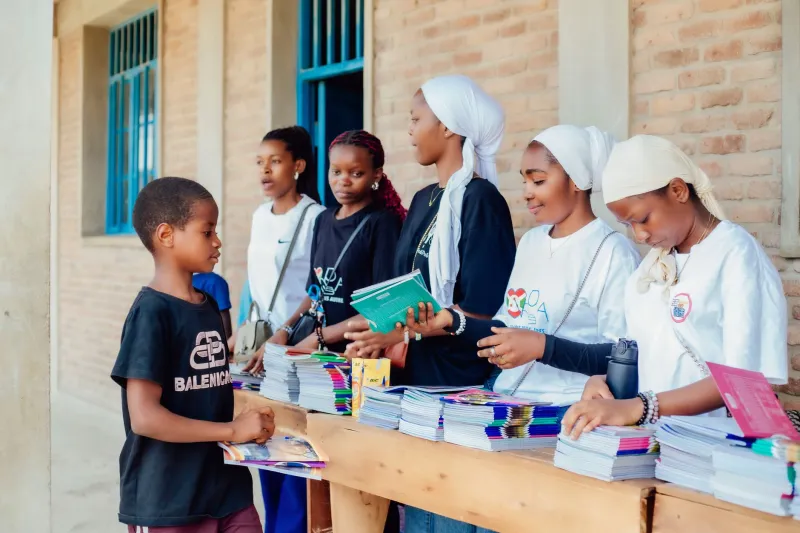
Think about what it means when a starting linebacker shows up to a school in his hometown, not for a photo op, but because he's been quietly funding after-school programs for three years. Or when a wide receiver uses his offseason to lobby state legislators about youth sports funding in underserved districts. These aren't one-off moments. They're part of a pattern of athletes investing in what you might call the commonwealth — the shared resources, institutions, and opportunities that hold communities together.
And fans, whether they realize it or not, are paying attention.
Why "Commonwealth" Thinking Hits Different in Sports
The word "commonwealth" might sound like something out of a civics textbook, but the concept is deeply embedded in sports culture. Think about it — every team is its own little commonwealth. You've got shared resources (the salary cap, the practice facility, the coaching staff), shared goals (winning), and individual contributors who have to subordinate personal glory for collective success. The best locker rooms run on exactly this logic.
When players take that same mindset off the field, it resonates. It's not abstract. A defensive end who understands that the offensive line protects him, and that he in turn protects the quarterback, already gets the basic principle: your success is tied to the health of the system around you. Applying that to a neighborhood, a city, or a broader community isn't that big a leap.
That's probably why some of the most effective athlete-advocates aren't the ones making the loudest noise on social media. They're the ones quietly building infrastructure — youth leagues, mentorship pipelines, scholarship funds — that actually produces results.
The Fan's Role in All of This
Here's where it gets a little uncomfortable, and we're going to say it plainly: fans have a responsibility here too. It's easy to cheer for a player's 40-yard dash time and tune out the moment they say something about education funding or community investment. But that's a selective relationship, and it doesn't do anybody any favors.
When athletes put real work into advocacy — not the performative kind, but the sustained, show-up-and-grind kind — that deserves the same energy fans bring to the stands on game day. It doesn't mean you have to agree with every position every player takes. Sports culture has always had room for disagreement, and that's fine. But dismissing off-field efforts as "stick to sports" misses the point entirely.
These players live in communities. They grew up in neighborhoods. They have kids in schools. Their advocacy isn't coming from some abstract political place — it's usually coming from lived experience, which is exactly the kind of credibility that makes it worth listening to.
What Real Advocacy Looks Like vs. What Gets Sold to You
Not all athlete advocacy is created equal, and being a real fan means being able to tell the difference. Some of what gets packaged as "giving back" is just brand management with better lighting. A press conference donation, a jersey auction that raises awareness for a cause nobody followed up on — that's noise, not signal.
Real advocacy looks different. It's sustained. It shows up in the same place more than once. It involves the player's actual time, not just their name on a press release. It produces measurable outcomes — kids enrolled in programs, policies changed, resources allocated differently.
The best examples tend to fly under the radar precisely because they're not designed for maximum media exposure. They're designed to actually work. As fans, learning to recognize and reward that distinction is part of being genuinely plugged into the culture of the sport, not just the spectacle.
Why This Matters for the Future of Sports Culture
Here's the bigger picture: sports leagues derive enormous value from the communities they operate in. Stadiums get built with public money. Tax exemptions get handed out. Fan bases pour billions into merchandise, tickets, and broadcast subscriptions. The relationship between professional sports and the broader public is not a one-way street, even if it sometimes gets treated like one.
When athletes advocate for the health and wellbeing of those communities — pushing for better schools, safer neighborhoods, more equitable access to sports at the youth level — they're actually reinforcing the foundation that makes the whole enterprise possible. Healthy communities produce athletes. They produce fans. They sustain the culture that makes sports matter in the first place.
That's not idealism. That's just how the math works.
The Bottom Line
Athletes who invest in their communities aren't doing something separate from sports — they're doing something that's deeply connected to what sports has always been about. Competition, yes. But also belonging, identity, collective effort, and the idea that what we build together is worth more than what any one of us can grab on our own.
As a fan, you've got a front-row seat to all of it. The question is whether you're watching the whole game or just the highlights.