The Revenge Game Con: Why the Media Needs That Story More Than the Player Does
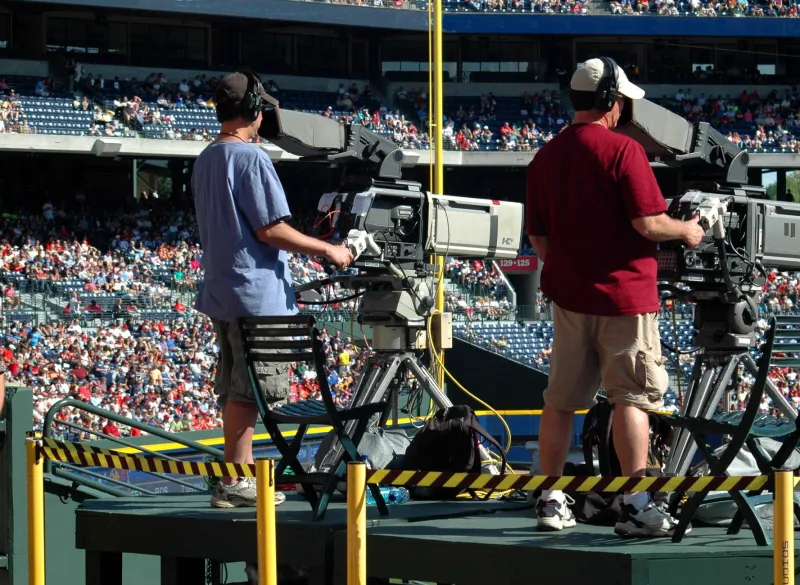
Somewhere in a production meeting before every high-profile matchup involving a player facing his former franchise, a producer makes the call. Pull the old clips. Find the quotes from the front office about why they moved on. Get a sound bite from a former teammate. Build the package. The revenge game narrative is coming, and it needs to be ready by Thursday.
The player, meanwhile, is probably watching film.
The gap between those two realities — the media's emotional investment in the revenge arc and the athlete's actual mental state — is where one of sports broadcasting's most reliable manufactured storylines lives. And it's worth calling it what it is.
How the Formula Works
The revenge game narrative has a remarkably consistent structure regardless of sport, player, or circumstance. A player leaves a team — through a trade, a free agency departure, or an outright release. He lands somewhere else and eventually faces his old employer in a regular season game. The storyline writes itself: he has something to prove. He wants to show them they were wrong. This is personal.
Broadcasters lean into it. The pregame show dedicates a segment to it. The analyst desk speculates about the player's emotional state. Social media amplifies it. By the time the game actually starts, you've been told approximately 40 times that this player is motivated in a way that regular games simply don't provide.
And then the game happens. And it's just a game.
Sometimes the player has a great performance. Sometimes he has an average one. Sometimes he has a bad game. And in each case, the narrative machine finds a way to confirm the story it already committed to telling.
The Broadcast Incentive Is Financial, Not Journalistic
Let's be honest about why this happens. Sports broadcasting is a business built on eyeballs, and emotional investment drives viewership more reliably than anything else. A game between two .500 teams in week nine of the regular season doesn't generate appointment viewing on its own. Add a revenge narrative, and suddenly there's a reason to tune in that extends beyond the standings.
The network isn't lying to you, exactly. They're just aggressively curating the story that serves their interests. They need you to care about this game enough to watch it, talk about it, and come back next week. The revenge narrative is one of the most efficient tools available for generating that engagement.
Teams benefit from this too. A former star returning to your stadium is a ticket-moving event. Marketing departments know it. Prices adjust accordingly. The emotional investment of the fanbase — the desire to see the old player fail, or succeed, depending on how the departure went — translates directly into revenue. The narrative isn't just entertainment. It's a promotional asset.
What the Players Actually Say (When They're Being Honest)
Athletes at the highest level are almost uniformly consistent on this point when they're speaking candidly rather than performing for the camera. The revenge game as an emotional concept is largely a media construction.
Professional athletes are trained from an early age to channel motivation into preparation, not personal grievance. The idea that a veteran player would approach a game against his former team with the kind of seething, score-settling energy that makes for compelling television is mostly fantasy. What they're actually doing is studying tendencies they already know from the inside, which is a legitimate competitive advantage — but it's a technical one, not an emotional one.
When players say things like "I just want to win" or "it's just another game," that's not deflection. That's usually accurate. The performance pressure they feel is real, but it comes from wanting to justify a contract or prove their value in a new system — not from needing to stick it to a front office that moved on from them.
The High-Profile Moments That Didn't Match the Hype
For every celebrated revenge performance that gets replayed in highlight packages, there are three or four moments where the narrative completely fell flat and the broadcast pretended it didn't.
A quarterback returns to face his old team in a game hyped for weeks as a defining moment. He throws for 190 yards and two interceptions. His new team loses. The postgame analysis spends exactly 45 seconds on the result before pivoting to what it means for the next game. The revenge narrative is quietly shelved until next time.
Or the player has a genuinely good game, his new team wins, and the broadcast treats it as confirmation of everything they predicted — ignoring that the opponent was missing two starters and ranked 28th in pass defense. Context evaporates when it gets in the way of the story.
The narrative is unfalsifiable by design. Good game? Revenge achieved. Bad game? The pressure got to him, which proves the emotional stakes were real. There's no outcome that the machine can't absorb and reframe.
The Fan's Role in All of This
Here's the part that's a little uncomfortable to admit: we participate in this willingly. The revenge narrative works because fans want it to work. There's something genuinely satisfying about the idea of an athlete proving doubters wrong, of a story with a clean emotional arc and a clear protagonist.
Sports media is extraordinarily good at giving us the stories we want, and the revenge game is one of the most satisfying story templates available. It has a setup, a conflict, and a resolution. It's structured like a movie, which is exactly why it feels so compelling even when the actual evidence for it is thin.
The problem isn't caring about sports. The problem is mistaking the broadcast's emotional frame for the reality of what's happening on the field. Those are two different things, and conflating them is how you end up thinking a week-nine divisional matchup is the most important game of someone's career.
Watch the Game, Skip the Narrative
None of this means you can't enjoy a matchup where a player faces his former team. Those games can be genuinely entertaining for all kinds of reasons — competitive stakes, scheme familiarity, individual performances that stand out regardless of the backstory.
But enjoy them for what they actually are: football games. The player probably isn't carrying years of resentment onto that field. The front office that moved on from him almost certainly made a business decision, not a personal one. And the broadcast package you watched three times before kickoff was produced by people whose job is to make you feel something, not to accurately represent an athlete's inner life.
The revenge game narrative is great television. It's just not great journalism. And knowing the difference is how you actually watch sports instead of just consuming the product you're being sold.