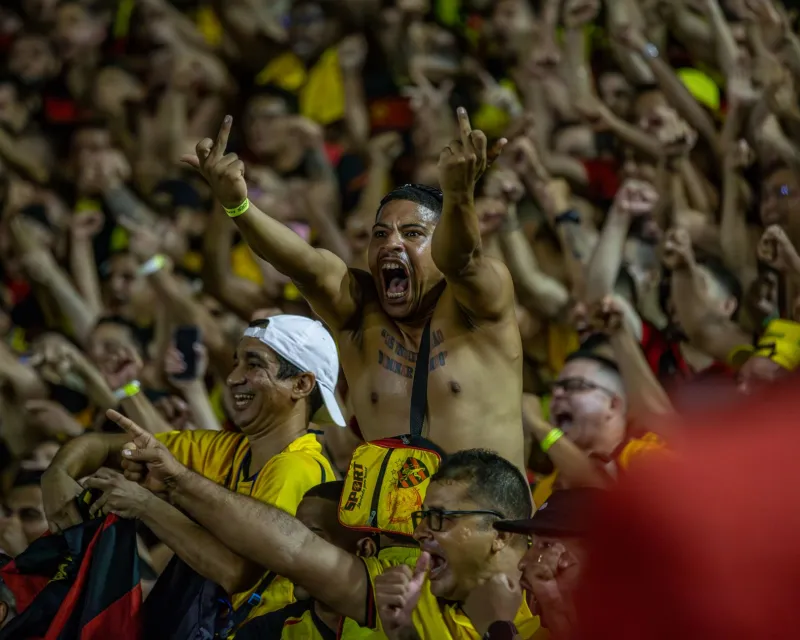
You're the Mark: How Teams Turn Your Passion Into Their Profit

Let's get something straight right up front. Nobody here is telling you to stop loving your team. That's not the play. But if you've ever dropped $180 on a jersey, paid $14 for a stadium beer, and renewed your season tickets even after a 4-win season — you deserve to know exactly what's happening to your wallet and why.
Spoiler: it's not accidental.
The Numbers Don't Lie, Even When the Teams Do
Research into sports consumer behavior consistently shows that self-identified "die-hard" fans spend somewhere between two and four times more per year on their team than casual or occasional viewers. We're talking across the board — tickets, merchandise, streaming packages, travel, food, and those little impulse buys at the team store you swore you wouldn't make.
A casual fan might catch a game on TV, buy a hat every few years, and call it a day. A devoted supporter? They're buying the Christmas ornaments, the pet bandanas, the throwback jerseys, and the "limited edition" playoff gear that somehow appears every single postseason regardless of how far the team actually goes. That stuff adds up fast. Industry analysts have pegged the average annual spend of a hardcore NFL fan somewhere north of $600 — and that's before you factor in any live attendance.
Teams know this. They've known it for decades. And they've built entire business models around squeezing every last dollar out of the people who care the most.
Dynamic Pricing: The Invisible Hand in Your Pocket
Here's one of the cleaner tricks in the playbook. Most major sports franchises now use dynamic ticket pricing, which sounds like a neutral tech term but is basically a mechanism designed to charge passionate fans more money at the exact moment their passion peaks.
Game against a division rival? Prices surge. Playoff push? Surge. Your team just made a big trade that's got the whole city buzzing? You guessed it. The algorithm reads the room, measures demand, and adjusts accordingly. The fans who want to be there the most — the ones who need to be there — end up paying a significant premium over face value just because their emotional investment is higher.
Casual fans, meanwhile, will wait until the week of the game, find prices have softened on the secondary market, and walk in for half what the season ticket holder paid in the presale window. The loyalty doesn't get rewarded with a discount. It gets rewarded with first access to pay more.
Merchandise Markups and the Jersey Cycle
The NFL merchandise machine is a masterclass in manufactured urgency. Consider how often a team tweaks its uniforms — new color rush alternates, updated logo treatments, helmet changes — in ways that conveniently render your existing gear slightly less "current." That's not just a style decision. It's a product refresh cycle that drives repeat purchases from the same loyal customer base.
A quality replica jersey costs somewhere between $15 and $30 to manufacture. It retails for $120 to $175. The markup isn't unique to sports, but the emotional lever that makes fans willing to pay it absolutely is. You're not just buying fabric. You're buying identity, belonging, and the ability to signal your tribe affiliation. Teams and their licensing partners understand that psychology intimately, and they price accordingly.
And then there's the player transaction trap. Your favorite linebacker gets traded. His jersey — the one you bought two seasons ago — becomes a relic. New guy comes in, hype builds, and the cycle starts over. Some fans buy three or four jerseys in a decade. That's not brand loyalty working for the consumer. That's brand loyalty working on the consumer.
Exclusive Content and the Subscription Squeeze
The digital era added a whole new layer to this. Teams now sell access to behind-the-scenes content, premium podcasts, early ticket windows, and app-exclusive features through subscription tiers that casual fans would never bother with. The target audience for these products is exactly who you'd expect: the obsessives, the superfans, the people who genuinely want every scrap of content their team produces.
Those fans pay monthly or annually for access that, if we're being honest, rarely delivers proportionate value. But the emotional pull of feeling "closer" to the team is enough to keep the subscriptions active. Teams have figured out that intimacy — or the convincing simulation of it — is a product you can sell indefinitely.
What Front Offices Actually Know
Here's the uncomfortable part. None of this is happening by accident or even by instinct. Modern sports franchises employ pricing strategists, behavioral economists, and data analysts whose entire job is to understand the elasticity of fan spending — meaning how much they can raise prices before fans start walking away. And the consistent finding is that die-hard fans have remarkably high elasticity tolerance. They'll absorb price increases that would send casual consumers running.
This is sometimes framed internally as "the fan experience investment" or "premium access pricing." But stripped of the language, it's a straightforward recognition that emotional attachment reduces price sensitivity, and teams can and should exploit that gap.
Executives at several major franchises have been candid about this in industry panels and sports business conferences, even if they'd never say it in a press release. The most loyal segment of your fanbase is also the least likely to defect, which makes them the safest group to charge more.
So What Do You Do With This?
Again — nobody's saying stop being a fan. The whole point of PlaySide is that sports fandom is worth it. The community, the shared experience, the actual joy of watching your team do something special — that stuff is real and it matters.
But going in with your eyes open is just good sense. You can love your team and still refuse to buy the $95 hoodie when a comparable one exists for half the price. You can be a ride-or-die supporter and still wait on ticket prices instead of panic-buying the second the presale window opens. You can appreciate the product without funding every single monetization scheme the franchise dreams up.
The teams are playing the long game with your loyalty. There's nothing wrong with playing a little smarter yourself.