What Your Team Isn't Telling You About That Injured Star
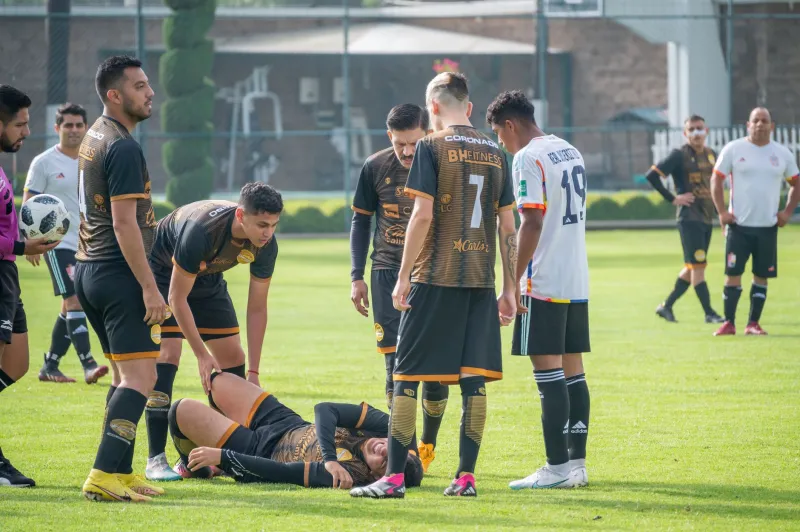
It happens like clockwork. Your team's best player limps off the field on Sunday, and by Wednesday the official word is something like "day-to-day with a lower body issue." You exhale. You check Twitter. You see a beat reporter post a blurry photo of him jogging lightly at practice. The team spokesperson says he's "progressing well." You let yourself believe it.
Then Sunday rolls around, and he's inactive.
Welcome to the NFL injury report — one of the most consistently misleading documents in American sports.
The Language Is Designed to Tell You Nothing
Let's start with the terminology, because it's doing a lot of heavy lifting. "Day-to-day" sounds reassuring. It implies forward motion, proximity to return. But in practice, it can mean almost anything — from a guy who's genuinely 72 hours from full clearance to a player whose coaching staff hasn't even gotten an honest prognosis from the team physician yet.
Then there's the classic "lower body injury" designation. It covers everything from a sprained pinky toe to a torn ACL. Teams lean on vague anatomical language not because they're trying to protect player privacy — though that's the excuse you'll hear — but because specificity creates accountability. If you say "knee," people start asking follow-up questions. If you say "lower body," you've said nothing and can't be held to anything.
The NFL actually mandates injury reporting, supposedly to prevent gambling-related manipulation. But the system has so many loopholes baked in that teams treat it less like a transparency requirement and more like a creative writing prompt.
The Financial Stakes Are Real, and They Warp Everything
Here's something that doesn't get talked about enough: teams have serious financial reasons to keep fans in the dark about how bad an injury actually is.
Think about it from a front office perspective. If you're honest that your franchise quarterback is probably done for the season after week four, what happens to the remaining home game attendance? What happens to the merchandise moving off shelves? What happens to the local TV ratings that drive your market value? None of it moves in the right direction.
So instead, you manage the message. You keep the "questionable" tag on the injury report as long as humanly possible. You let beat reporters speculate. You have the coach say something like "we're taking it one day at a time and remain hopeful" at a Thursday presser. You sell the idea of a return without ever actually promising one.
This is especially acute during playoff pushes. Teams in wild card races have a powerful incentive to keep fan bases engaged and optimistic. An honest injury update can crater season ticket renewals, kill walk-up sales, and deflate the kind of home-field energy that actually matters. So they don't give you the honest update. They give you the update that keeps the lights on.
Real Examples That Should Have Made You Angrier
This isn't a theoretical problem. The history of the NFL is littered with examples of injury timelines that collapsed the moment they were stress-tested by reality.
Remember when Dak Prescott's compound fracture in 2020 was followed by consistent talk of a potential return that same season? The Cowboys kept the door open on his comeback long after it was medically reasonable to do so. Fans held their breath for weeks on a return that was never realistically coming.
Or look at the recurring saga around Tua Tagovailoa and concussion protocol. The timeline of what the Dolphins knew, when they knew it, and what they told the public became a genuinely troubling story — one that raised questions not just about spin, but about player safety being subordinated to competitive and financial interests.
And it's not just quarterbacks. Skill position players, pass rushers, offensive linemen — whenever a high-profile player goes down, the organizational instinct is almost always to minimize and delay rather than be straight with the people who bought tickets and jerseys and Sunday Ticket subscriptions.
The Coaches Aren't Innocent Either
Head coaches have their own motivations layered on top of the front office's. Keeping an injury vague creates tactical ambiguity for opponents. If the other team's defensive coordinator doesn't know whether your starting receiver is actually playing on Sunday, he has to prepare for two different game plans. That uncertainty has real value.
So coaches will legitimately use the injury report as a competitive tool, sometimes listing players as questionable who they know full well are going to play, just to force the opponent to hedge. The problem is that this legitimate tactical gamesmanship bleeds directly into the misinformation that fans consume and make decisions based on.
Fans aren't just passive observers here. They're making fantasy football lineup calls. They're deciding whether to drive three hours to see a game. They're emotionally preparing for a playoff run. And they're doing all of it on information that was crafted, at least in part, to deceive.
What Fans Can Actually Do With This Information
Once you understand how the game is played, you can stop being a passive victim of it and start reading the signals more accurately.
First rule: ignore the label, watch the practice participation. Full participation on Wednesday, Thursday, and Friday is the only real green light. Anything less — limited, non-participant, or the dreaded "did not practice" — is a warning sign regardless of what the team spokesperson says at the podium.
Second rule: pay attention to how coaches talk about the injury, not just what they say. Hedging language like "we'll see how he responds" or "taking it day by day" from a head coach on Friday is almost always a quiet signal that the player isn't going. Coaches who are confident in a return tend to say so more directly.
Third rule: trust the beat reporters over the official releases. The good ones have sources inside training rooms and have been burned enough times by official spin that they've learned to read between the lines. When a beat writer says "I wouldn't bank on him playing," that's worth more than an official team statement calling the player "hopeful."
The Bigger Picture
The injury report problem is really just one piece of a larger dynamic in professional sports — the gap between what organizations tell their fan bases and what's actually happening inside the building. Teams are sophisticated media operations now, and they're very good at controlling narratives. The injury report is a weekly reminder of that.
None of this means you should stop caring. It just means you should stop being naive about the information you're receiving. The franchise you root for is not your friend. It's a business that benefits from your emotional investment and manages information accordingly.
Knowing that doesn't make Sunday any less fun. But it might save you from spending Saturday convinced your team is one healthy quarterback away from a run — only to find out Sunday morning that he was never actually close.