Leaky Pipes and Luxury Boxes: The Stadium Gap Nobody in the Broadcast Booth Will Touch

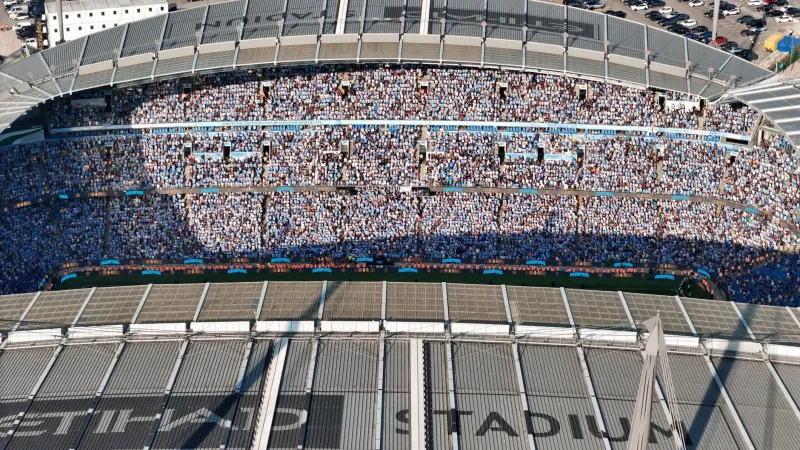
The next time you're watching a game and the broadcast cuts to a sweeping aerial shot of the stadium — the perfectly manicured grass, the gleaming scoreboard, the packed stands — take a second to think about what the camera isn't showing you.
Because that shot is real estate marketing, not journalism. And behind those walls, in the tunnels and weight rooms and training facilities and equipment bays, there is an enormous and growing gap between what well-funded franchises provide their players and what underfunded ones don't. That gap has competitive consequences. And almost nobody in the mainstream sports media talks about it.
What You See vs. What Players Deal With
Let's start with the playing surface, because it's the most visible and the most frequently glossed over.
Not all NFL fields are equal. Not even close. The difference between a well-maintained natural grass field and a poorly installed or aging artificial turf surface isn't just aesthetic — it's a documented injury risk factor. Players and agents have been saying this for years. Multiple studies have pointed to higher rates of non-contact lower-body injuries on certain synthetic surfaces compared to natural grass.
Some stadiums have invested heavily in surface technology — temperature-controlled fields, modern hybrid grass systems, turf that's replaced on a rigorous schedule. Others are playing on surfaces that were installed years ago and haven't been significantly upgraded since. The players who have to perform on those surfaces know the difference. Their ankles and knees know the difference. The injury reports tell the story if you know how to read them.
But the broadcast doesn't linger on that. The camera shows you green and you assume everything is fine.
The Training Facility Divide
Here's where the real competitive disparity lives, and it's not even inside the stadium itself.
Over the past decade, the NFL's wealthiest franchises have built training complexes that are genuinely staggering in scope. We're talking about facilities with state-of-the-art hydrotherapy pools, altitude rooms, cryotherapy chambers, biomechanical analysis labs, sleep optimization pods, and nutrition programs designed by full-time staff of registered dietitians.
These aren't perks. They're recovery tools. And recovery is one of the most significant performance variables in professional football.
A player who has access to a full hydrotherapy suite and a recovery protocol built around his specific physical profile is going to be more available, more durable, and more effective than a player at a facility that still has the same weight room equipment it had in 2008. The difference compounds over the course of a 17-game season and a potential playoff run.
Now look at the other end of the spectrum. There are franchises — legitimate NFL franchises with loyal fanbases and multi-billion-dollar valuations — whose practice facilities are genuinely outdated. Cramped meeting rooms. Inadequate training staff ratios. Aging equipment. Locker rooms that wouldn't impress a mid-major college program.
Players notice. Agents notice. Free agents absolutely notice.
The Free Agency Factor
This is the piece that directly connects facility quality to on-field outcomes, and it's something front offices quietly understand even if they don't advertise it.
When a veteran free agent is weighing two comparable offers, the facility visit matters. A lot. Players talk to each other. They know which organizations invest in their bodies and which ones treat them like interchangeable parts. A franchise that can't show a visiting free agent a modern training complex, a well-equipped medical staff, and a genuine commitment to player health is going to lose that signing battle more often than not, even if the money is comparable.
So the facility gap creates a roster gap. The teams with the best facilities attract and retain better players, those players perform better and stay healthier, and the teams with substandard facilities cycle through free agents who view them as a last resort.
None of this is reflected in the preseason odds. Vegas doesn't have a line for "does this team's training facility have functional cold tubs."
The Ownership Investment Signal
A franchise's willingness to invest in its physical infrastructure tells you something important about how ownership views the team.
Stadiums and training facilities are capital expenditures. They require real money, real commitment, and a genuine belief that improving the working environment for players translates to wins. Ownership groups that have made those investments — even when it wasn't strictly necessary, even when the existing facility was "fine" — are sending a signal to their coaches, players, and front office that this organization is serious about competing.
Ownership groups that have let facilities age, that have deferred maintenance, that have prioritized revenue-generating upgrades (luxury suites, premium club areas, better concessions) over player-facing infrastructure are sending a different signal. They're running a profitable entertainment business. They're just also trying to win football games with it, and those two priorities don't always align.
The fans sitting in those luxury suites are comfortable. The players in the locker room two levels below them might be dealing with inadequate recovery equipment and a training staff that's stretched too thin.
What the Camera Chooses Not to Show
Broadcast partners have financial relationships with the league and with individual teams. The pregame feature that takes you "behind the scenes" at a franchise is produced with the team's cooperation and approval. You're getting a curated tour, not an inspection.
The genuinely interesting stuff — the deferred maintenance, the outdated equipment, the facility that hasn't been significantly upgraded since the team last made a playoff run fifteen years ago — doesn't make it into the segment. It doesn't fit the narrative that the NFL is a uniformly first-class operation from top to bottom.
But players, trainers, and equipment staff know the truth. The reporters who cover teams day-to-day know the truth. It just doesn't get amplified the way injury reports and trade rumors do.
Why This Should Matter to You as a Fan
If you're invested enough in your team to read a breakdown of why they keep losing, you deserve to know the full picture. And the full picture includes the possibility that your team is operating at a structural disadvantage that has nothing to do with coaching, drafting, or player talent.
Some teams are playing with better tools. Better surfaces, better recovery options, better facilities that attract better free agents and keep players healthier deeper into the season. That's a real competitive edge. It's just not a glamorous one, and it doesn't fit neatly into a halftime highlight package.
Next time your team loses a close game in December because three key players are banged up and running at 70 percent, ask yourself what their recovery week looked like. And then ask whether the team they just lost to had better answers to that question.
The broadcast won't tell you. But the standings eventually do.