Two Teams, One Heart: The Very Real Struggle of Rooting for the Wrong City
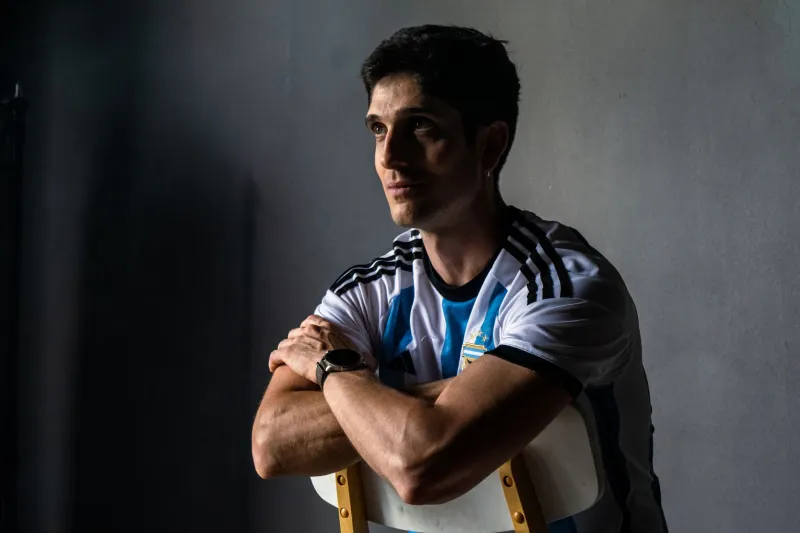
Mike Torrance grew up in Pittsburgh. Steelers blankets, Franco Harris posters, the whole deal. He could recite the 1975 Super Bowl roster before he could multiply fractions. Then, at 28, his company transferred him to Charlotte, North Carolina. That was eleven years ago.
"I still wear my Steelers gear," he told us. "But I'll be honest — it's complicated now. My kids were born here. They want to root for the Panthers. And sometimes I wonder if I'm holding onto something just because letting go feels like betraying my dad."
Mike's situation isn't rare. It's actually one of the defining fan experiences of the modern era, and yet nobody really talks about it with the seriousness it deserves. We're a mobile country. People move for jobs, for partners, for cheaper rent, for a fresh start. But your team? Your team doesn't move with you. Or does it?
The Geography of Loyalty
For most of American sports history, fan allegiance was geography. You rooted for the team in your city because that was your team. Full stop. There wasn't much philosophical debate about it. If you were from Chicago, you were a Bears fan. If you were from Dallas, you bled silver and blue. The local team was a civic institution, as much a part of your identity as your neighborhood or your accent.
But that model assumed something that's no longer true for a huge chunk of the country: that people stay put.
The U.S. Census Bureau has tracked rising internal migration rates for decades. Millions of Americans relocate across state lines every year, and with that movement comes an identity question that nobody warned them about — what happens to your fandom?
For some people, the answer is easy. Loyalty is loyalty. Your childhood team is your team forever, geography be damned. These are the people who will watch their team on NFL Sunday Ticket, drive three hours to an away game, and spend the entire week at their new job explaining why they still care about a franchise 1,200 miles away.
For others, the pull of community wins out. There's something powerful about being part of a local fan base, about watching a game at a bar where everyone around you is invested in the same outcome. Rooting for a new city's team is less about abandoning the old one and more about belonging somewhere new.
And then there's everyone in between — which is most of us.
"Am I Even a Real Fan Anymore?"
This is the question that keeps relocated fans up at night. And it's one that social media has made significantly more complicated.
Twenty years ago, if you moved from Green Bay to Phoenix, you'd gradually drift. You'd catch the Packers when they were on national TV, maybe follow the scores, but your daily sports conversation would shift toward the Cardinals because that's what was on local radio and in the local paper. The transition was organic, almost invisible.
Now? You can watch every single Packers game in 4K from your living room in Phoenix. You can follow the beat reporters on Twitter, listen to the local Milwaukee sports radio stream on your phone, and participate in a Reddit community of 500,000 fellow fans who span every time zone. The old, geography-based drift mechanism is essentially broken.
Which sounds great, right? You can stay connected to your team no matter where you are. Except it creates a strange limbo. You're deeply invested in a team that has no connection to your actual daily life. Your neighbors don't care. Your coworkers don't care. When your team wins the championship, you have nobody to celebrate with in person.
Jamila Reeves moved from New Orleans to Denver six years ago. She's still a Saints fan. Fiercely.
"People here think I'm weird," she laughs. "They're like, 'You live here now.' And I get it. But the Saints aren't just a football team to me. They're tied to my family, to Mardi Gras, to the Superdome. That doesn't disappear because I took a job in Colorado."
But she also admits something quietly. "I went to a Broncos game last year with a coworker. And when the stadium got loud and everyone around me was going crazy... I felt something. I won't lie about that."
The Hometownless Fan
Then there's a whole other category that doesn't get nearly enough attention: people who grew up in places that never had a major sports franchise at all.
If you're from Wyoming, Mississippi, or Vermont, you didn't grow up with a local NFL team. You had to pick one, and that choice was shaped by family, by the team that was on TV most often, by a jersey someone bought you as a kid, or sometimes just by pure aesthetic preference. You liked the logo. You liked the color scheme. You liked the quarterback.
These fans often face the most skepticism about their "realness." They're accused of bandwagoning, of being casual, of not really understanding what it means to be a fan. It's a kind of geographic gatekeeping that's both pervasive and kind of ridiculous when you think about it.
Being a fan is about emotional investment. It's about caring what happens. It's about the anxiety before a big game and the specific joy — or heartbreak — of the outcome. None of that requires a zip code.
What Does "Real" Even Mean in 2024?
Here's the honest truth: the definition of a "real fan" has always been a moving target, and people have always used it to exclude others from a community they want to feel special about.
In 2024, fandom is personal. It's built from a thousand different inputs — childhood memories, family traditions, social communities, streaming habits, fantasy leagues, social media algorithms. Telling someone they're not a real fan because they moved to a different city, or because they grew up somewhere without a team, or because they came to the sport late, is just gatekeeping dressed up as passion.
The more interesting question isn't whether you're a real fan. It's what your fandom actually means to you — and who you share it with.
Mike Torrance, back in Charlotte, is still a Steelers fan. But he's started watching Panthers games with his kids on Sundays when Pittsburgh has an early kickoff. He's not switching allegiances. He's just making room.
"My dad would understand," he says. "He just wanted me to love the game."
That sounds pretty real to us.